

Voice OTP API for Automated Phone Verification
A Voice OTP API delivers a one-time verification code through an automated phone call that reads the code aloud, instead of - or alongside - sending it as an SMS. It's a complementary channel, not a universal replacement: each has different strengths depending on the situation.
This page covers how Voice OTP works, when it makes sense versus SMS OTP, fallback configuration, security practices, and integration - without claiming guaranteed delivery or overstating security advantages either channel doesn't actually have.
How Does Voice OTP Work?
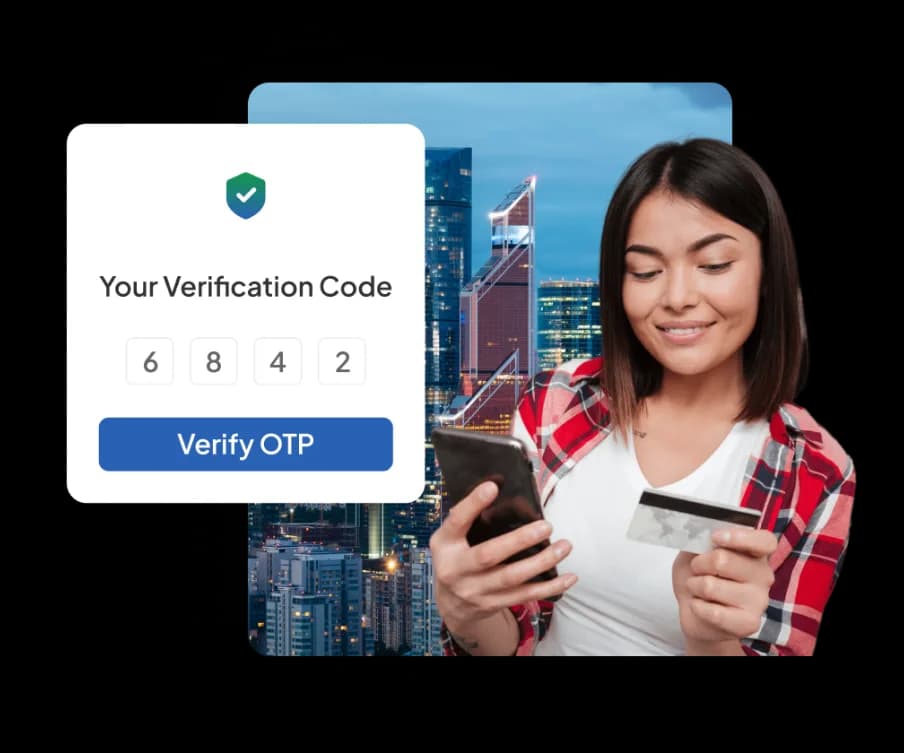
A user requests an OTP, your backend generates and stores it, the Voice OTP API places an automated call to the user's number, a voice prompt reads the code aloud, the user notes it and enters it back into your application, and your backend verifies the entered code against the one it generated.
User Requests OTPBackend Generates OTPVoice OTP API
Automated CallVoice Prompt Reads Code
User Enters CodeBackend Verifies OTP
Teleopedia's Voice & OBD Calling supports multi-language voice bots, which is what makes reading a dynamic code back to a caller in their preferred language possible - this runs on the same flow-based voice infrastructure covered on Voice API.
Voice OTP vs SMS OTP
Neither channel is universally better - each fits different circumstances.
| Factor | SMS OTP | Voice OTP |
|---|---|---|
| Delivery mechanism | Text message | Automated spoken call |
| User interaction | Read and type the code | Listen and type the code |
| API integration | SMS API, DLT-registered template | Voice API, flow-based call |
| Device requirement | Any phone that receives SMS | Any phone that can receive a call |
| Accessibility | Requires reading the message | Useful where reading is inconvenient or the SMS didn't arrive |
| Common use cases | Primary OTP channel for most sign-ups/logins | Alternate channel, or escalation when SMS is delayed |
| Fallback role | Often the primary channel | Common fallback/escalation destination |
| User experience | Familiar, low-friction for most users | Useful when a user isn't checking messages |
Voice OTP Use Cases
Account Verification
Confirming a new account by reading the verification code aloud.
Login
An alternate OTP channel for login when SMS delivery is delayed or uncertain.
Password Reset
Verifying identity during account recovery via an automated call.
High-Value Transactions
An additional verification step for sensitive or high-value actions.
Customer Verification
Confirming a customer's identity during a support interaction.
Recovery Workflows
Account or order recovery flows where a phone call improves reachability.
Voice OTP Fallback
Primary OTP Channel (e.g. SMS)
Configured condition not met (e.g. no delivery confirmation within a set window)
Escalate to Voice OTP
This is a configurable pattern where supported - a business defines the primary channel, the condition that triggers escalation, and the fallback channel. See Omnichannel Messaging Fallback for how this kind of routing works across channels generally.
Adding Voice OTP To Your Verification Flow?
Talk to our team about integration, fallback logic and security setup.
Voice Call Flow & API Integration
A Voice OTP call is triggered through the same voice calling endpoint used for other automated calls, with the flow ID pointing to an OTP-reading flow:
POST /voice/calls
Authorization: Bearer YOUR_API_KEY
Content-Type: application/json

{
  "to": "+919876543210",
  "flow_id": "voice_otp_flow",
  "language": "en-IN"
}
Call status - including answered/unanswered - is reported the same way as any other channel:
{
  "message_id": "voice_5c81ab",
  "channel": "voice",
  "status": "delivered",
  "timestamp": "2026-09-23T10:42:00Z"
}
Security & Fraud Prevention
These practices apply regardless of delivery channel - they're what actually makes an OTP system secure, not the choice between voice and SMS:
Short OTP Validity
Keep the expiry window tight to limit the value of an intercepted code.
Attempt Limits
Cap verification attempts per code to prevent brute-force guessing.
Server-Side Verification
Generate and verify OTPs on your backend, never in client-side code.
Rate Limiting
Limit how often a number can request a new OTP in a given window.
Logging
Log OTP requests and verification attempts for abuse detection.
Secure API Credentials
Store your API key securely and never expose OTP generation logic to the client.
Voice OTP Analytics & Multi-Channel Integration
Call answer rate and delivery status are tracked from the same dashboard used across every channel, so Voice OTP performance sits alongside OTP SMS API and Transactional SMS API reporting rather than requiring a separate tool - all running on the same account as IVR API for broader voice workflows.
Voice OTP API FAQs
What is Voice OTP?
Voice OTP is a one-time password delivered through an automated phone call that reads the code aloud to the recipient, rather than sending it as a text message.
What is a Voice OTP API?
A Voice OTP API is a programmable interface that lets an application trigger an automated call to deliver a one-time code, as an alternative or complement to SMS-based OTP delivery.
How does Voice OTP work?
Your backend generates the OTP, calls the Voice OTP API with the recipient's number and the code, an automated call plays the code as a voice prompt, the user notes it down, and your backend verifies what they enter against the original code - see the call flow on this page.
Is Voice OTP more secure than SMS OTP?
Not universally - security depends on how the whole system is built (expiry, attempt limits, server-side verification), not just the delivery channel. Neither channel is inherently more secure in every scenario; each has different failure modes.
Does Voice OTP guarantee delivery?
No. Like any call, delivery depends on the number being reachable and the call being answered - it isn't a guaranteed-delivery mechanism, which is why call status should be checked rather than assumed.
When should I use Voice OTP instead of SMS OTP?
Common cases include escalating after an SMS OTP hasn't registered as delivered within a short window, reaching users who don't check text messages promptly, or offering an alternate channel during account recovery.
Can Voice OTP be a fallback for SMS OTP?
Yes, when configured for that use case - if the primary OTP channel doesn't meet your configured delivery condition within a set window, the flow can escalate to Voice OTP. This is business-defined routing, not automatic for every OTP send.
How long is a Voice OTP valid?
OTP validity windows are intentionally short and should be set by your application logic - the delivery channel (voice or SMS) doesn't change the need for a short expiry to limit misuse.
How many attempts should a Voice OTP allow?
Limit verification attempts per code and apply rate limiting per number, regardless of channel - this is a server-side control your application should enforce, not something the delivery channel handles for you.
Is Voice OTP integration different from Voice API integration?
No - Voice OTP calls run through the same Voice API and flow mechanism used for other automated calls; the flow you reference is simply built to read out a code rather than a general announcement.
How do I track whether a Voice OTP call was answered?
Call status - including whether it was answered - is reported back through the same webhook mechanism used across Teleopedia's channels, correlated to the call by its message ID.
Can Voice OTP integrate with WhatsApp or RCS?
Voice OTP typically complements SMS OTP and WhatsApp/RCS authentication templates within a broader verification strategy, with each channel available from the same account rather than requiring separate integrations.
What industries use Voice OTP the most?
Banking and fintech, ecommerce account recovery, and any service verifying high-value or sensitive actions commonly use Voice OTP as a secondary channel alongside SMS.
How do I prevent abuse of a Voice OTP system?
Apply the same discipline as any OTP system - short expiry, capped verification attempts, rate limiting per number, server-side generation and verification, secure API credentials, and logging - never exposing OTP generation logic to the client.
Does Teleopedia generate the OTP code for Voice OTP?
No - your backend generates and stores the OTP; the Voice OTP API is responsible for delivering it by call, and your backend verifies what the user enters, consistent with how OTP SMS API works.
Ready to unify your business communication?
Most businesses are live on their own branded panel within days, not months - talk to our team today and see how fast you can start sending.