

OTP SMS API
An OTP SMS API delivers one-time passcodes to a user's phone for login, signup and payment verification - a focused, transactional use of SMS built for speed and reliability rather than the broader promotional or bulk sending covered on our SMS API page.
This page covers how OTP delivery works, the difference between generating and delivering an OTP, retry and timeout handling, security considerations, and how to integrate OTP SMS into a login, signup or checkout flow.
On this page:
What an OTP SMS API is, and the difference between generation and delivery
The end-to-end OTP flow, from user request to verification
Retry, timeout and security considerations for developers
Use cases across banking, e-commerce, SaaS and education, plus FAQs
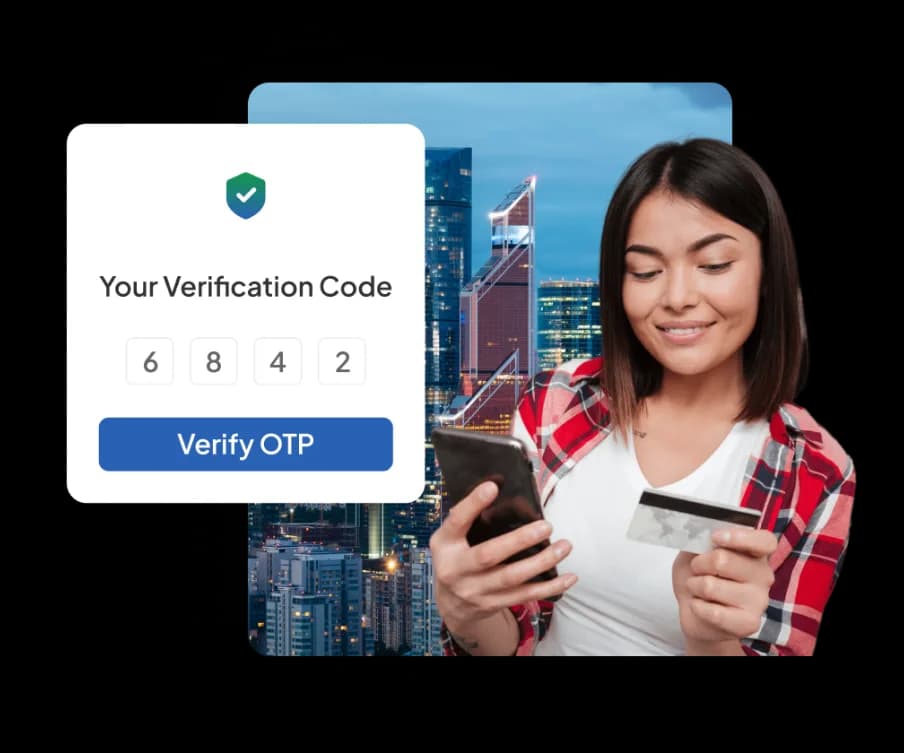
What Is an OTP SMS API?
An OTP SMS API is a REST endpoint dedicated to sending one-time passcodes - short, time-sensitive numeric or alphanumeric codes used to verify that a user controls the phone number or account they're claiming. It's a narrower job than general SMS sending: one message, sent fast, on a route built for transactional delivery rather than bulk throughput.
Because OTPs gate a login, a signup or a payment, the priority is speed and dependable delivery status - your application needs to know quickly whether the code reached the user, so it can offer a retry or an alternate channel if it didn't.
OTP Generation vs OTP Delivery
These are two separate responsibilities, and it matters which side owns which:
OTP generation - creating the code, deciding its length and expiry, and verifying what the user submits - happens in your backend. Teleopedia does not generate or verify OTPs on your behalf.
OTP delivery - getting the code your backend generated to the user's phone as an SMS, and reporting back whether it was delivered - is what the OTP SMS API does.
In short: your system decides what the code is and whether it's correct; Teleopedia's API gets it to the user and tells you what happened to that delivery attempt.
How OTP Verification Works
The end-to-end flow from a user action to a verified code.
User requests an action
A customer tries to log in, sign up or confirm a payment on your app or website.
Your backend generates the OTP
Your application generates the one-time code and decides how long it stays valid.
Your backend calls the Teleopedia API
The OTP and recipient number are sent to the OTP SMS API over an authenticated request.
The SMS gateway delivers the message
The OTP is routed through the SMS gateway to the recipient’s handset on a transactional route.
The user receives the OTP
The code arrives as a standard SMS from your registered sender ID.
Your backend verifies the code
The user enters the OTP, and your application checks it against the one it generated.
API Integration
OTP delivery uses the same authenticated SMS endpoint as other transactional sends, with your DLT-registered OTP template referenced by ID:
POST /v1/sms/messages
Authorization: Bearer YOUR_API_KEY
Content-Type: application/json

{
  "to": "+919876543210",
  "sender_id": "TLPEDA",
  "dlt_template_id": "1707162XXXXXXXXX",
  "message": "Your OTP is 482910. Valid for 5 minutes. Do not share this code."
}
The response returns a message ID your application can track for delivery status:
{
  "message_id": "otp_5c81aa",
  "status": "queued",
  "channel": "sms"
}
View API DocumentationDelivery Status, Retry & Timeout Handling
Because an OTP has a short useful life, what your application does around delivery matters as much as the send itself:
Delivery Status
Sent, delivered or failed status is reported against the message ID, via webhook or dashboard.
Retry Handling
A "resend OTP" action in your UI is a fresh API call with a newly generated code - your backend controls how many retries it allows.
Timeout Handling
Your backend sets the OTP's expiry window and rejects a code submitted after it lapses, independent of delivery time.
We don't guarantee a fixed delivery time for any SMS, since actual delivery speed depends on the recipient's operator and network conditions - this is why timeout logic belongs in your application rather than being assumed from the send.
Security Considerations
An OTP is only as secure as the system generating and checking it. A few practices worth building into your integration:
Generate and store OTPs server-side only - never send the expected value to the client.
Set a short expiry window and invalidate a code once it's used or expired.
Limit verification attempts per code to prevent brute-forcing a short numeric OTP.
Rate-limit how often a single number can request a new OTP, to prevent abuse of your sending quota.
On the delivery side, every API request is authenticated with a bearer token, and default rate limits apply per account to protect against runaway sending - contact our team if your use case needs higher throughput.
As with other transactional SMS, OTP templates sent to Indian numbers are registered against your DLT entity in advance - see DLT Compliant CPaaS for how that registration works.
Building OTP Into A Login Or Checkout Flow?
Share your number and we'll help you get an OTP template registered and connected.
OTP Use Cases
Account verification, login and password reset, applied across industries.
Across every industry, the same three moments account for most OTP traffic: account verification at signup, login verification for returning users, and password reset when access needs to be recovered securely.
Fallback Considerations for OTP
OTP SMS is itself commonly configured as the fallback for a WhatsApp or RCS authentication template that isn't delivered or opened in time. Because a login or payment is time-sensitive, some businesses configure an additional escalation - to an automated voice call reading out the code - if the SMS OTP doesn't register as delivered within a short window.
This kind of channel escalation is configurable, rule-based routing, not a default behavior applied to every OTP. See how fallback rules and delivery-status-based routing work in general on Omnichannel Messaging Fallback.
Developer Integration
OTP delivery uses the same REST conventions, authentication and webhook contract as the rest of the SMS API, so a team already sending transactional SMS doesn't need a separate integration for OTPs - just a dedicated DLT template and, typically, a tighter rate limit per number on your own application logic.
Voice OTP
Automated voice calls can read out an OTP as an alternate or escalation channel to SMS.
Shared Reporting
OTP delivery performance is visible alongside your other transactional SMS in the same dashboard.
Frequently Asked Questions About the OTP SMS API
What is an OTP SMS API?
An OTP SMS API is a REST endpoint dedicated to delivering one-time passcodes to a user's phone for login, signup or payment verification, on a transactional route built for speed and delivery-status reporting.
Does Teleopedia generate OTP codes?
No, your application generates and verifies the OTP. Teleopedia's API delivers the code you've already generated to the user's phone and reports delivery status back.
How long does OTP delivery take?
Delivery speed depends on the recipient's mobile operator and network conditions - we don't guarantee a fixed delivery time, which is why expiry and timeout logic should live in your own application.
What happens if an OTP SMS isn't delivered?
Your webhook receives a failed status for that message ID, and your application can offer the user a retry - a fresh API call with a newly generated code - or escalate to an alternate channel if one is configured.
Can I resend an OTP if the user doesn't receive it?
Yes, a resend is a new API request with a freshly generated code. How many retries to allow, and how often, is controlled by your own application logic.
Is there a voice OTP option?
Yes, an automated voice call can read out an OTP as an alternate or escalation channel, typically configured for cases where SMS delivery is time-critical.
How is OTP SMS different from regular transactional SMS?
Both use the same underlying SMS API and DLT-registered templates, but OTP messages are treated as a focused, single-purpose use case - one short code, sent fast, with delivery status your application checks before the code expires.
Is OTP SMS DLT compliant in India?
Yes, OTP templates sent to Indian numbers are registered against your DLT entity in advance, the same as other transactional SMS content.
What security practices should I follow for OTPs?
Generate and verify codes server-side, use a short expiry window, limit verification attempts per code, and rate-limit how often a single number can request a new OTP.
Can OTP SMS be rate-limited?
Yes, default API rate limits apply per account, and your own application should additionally limit how often a single phone number can request a new OTP.
Is delivery guaranteed for OTP SMS?
No SMS provider can guarantee delivery, since it depends on factors like the recipient's network and device state - what's provided is delivery-status reporting so your application knows the outcome and can respond accordingly.
Which industries use OTP SMS the most?
Banking and fintech for login and payment verification, e-commerce for account and checkout verification, SaaS for signup and login, and education for parent or student portal access.
Ready to unify your business communication?
Most businesses are live on their own branded panel within days, not months - talk to our team today and see how fast you can start sending.