

Omnichannel Messaging Fallback
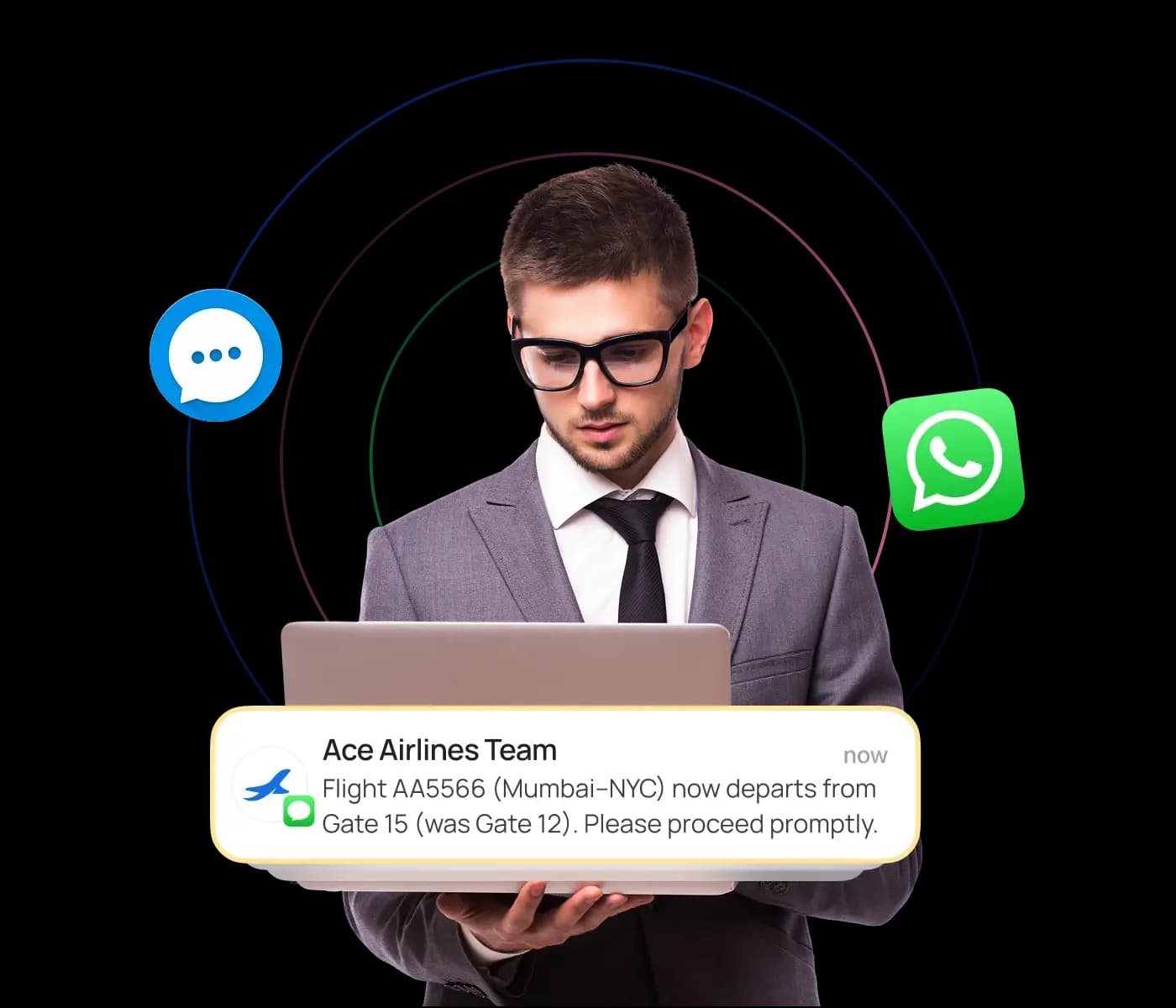
Omnichannel messaging fallback is configurable, rule-based routing that moves a message to another channel when it doesn't complete delivery on the one you tried first - for example, from WhatsApp to SMS, or RCS to SMS - based on delivery status, channel availability and the business rules you define.
This page is specifically about how that delivery fallback, routing and failover mechanism works. For a broader look at running WhatsApp, RCS, SMS and Voice together as a full communication platform, see Omnichannel Messaging Platform.
On this page:
What omnichannel fallback is, and why businesses configure it
How delivery-status-based routing, retry logic and failover architecture work
Unified message tracking and analytics across channels
Example customer journeys by use case, developer integration, and FAQs
What Is Omnichannel Messaging Fallback?
It's the layer that decides what happens after a message doesn't deliver the way you expected. Instead of a failed send simply disappearing into a log, a fallback rule you've configured can route it to a different channel - so the outcome of a failed WhatsApp send is a second attempt on SMS, not silence.
The important qualifier is configurable. Fallback behavior depends on the rules you set up for a given message type, the delivery and status signals a channel actually supports, and the channel priority you define - it is not a single automatic behavior applied identically to every message you send.
Why Businesses Need Message Fallback
Not every customer has a given app installed, or has opted in to receive messages on it.
Rich channels like RCS depend on device and carrier support that varies across a customer base.
A single channel having an outage or degraded delivery shouldn't mean every affected message goes unanswered.
Time-sensitive messages - a login code, a payment alert - can't always wait for a manual check and resend.
WhatsApp → SMS and RCS → SMS Fallback
These are the two most common fallback routes, and both work the same way: a message is sent on the richer channel first, and if it doesn't complete delivery within your configured window, a resend is triggered on SMS as the next channel in the route.
WhatsApp SMS
Used when a customer may not have WhatsApp installed, hasn't opted in, or a template send doesn't confirm delivery in time.
RCS SMS
Used when a recipient's device or carrier doesn't support RCS, so the rich card is replaced by a plain-text equivalent.
SMS is the common destination in both cases because it reaches virtually any active mobile number without depending on an app or a rich-messaging feature - see SMS API for how that delivery layer works.
Multi-Channel Routing & Business Rules
Routing is configured per use case, not applied as one blanket rule across everything you send. Three inputs shape how a route behaves:
Delivery-status-based routing - the fallback check looks at the actual delivery status a channel reports back, such as sent, delivered or failed, within the time window you set.
Channel availability - whether a channel is reachable at all for a given recipient, such as a number not opted into WhatsApp or a device without RCS support.
Business rules - the channel priority order, wait time before escalating, and whether a given message type falls back at all, all set by you per use case.
A login OTP and a promotional broadcast can be configured very differently: the OTP might escalate within seconds, while the promotional message might not fall back at all, since a channel-blind marketing send to a phone call isn't the outcome most businesses want.
Retry Logic & Failover Architecture
How a single message moves through a configured fallback route, step by step.
- 1
A message is triggered
An event in your application - an order, an OTP, a support reply - triggers a send with a configured channel priority.
- 2
It's sent on the first-priority channel
The message goes out on whichever channel you've set as first choice for that use case, such as WhatsApp.
- 3
Delivery status is checked
Teleopedia monitors the delivery status returned by that channel within the time window you've configured.
- 4
A fallback rule is evaluated
If delivery doesn't complete in that window, your configured fallback rule decides whether - and where - the message moves next.
- 5
The message is retried on the next channel
If a fallback route is configured, the message goes out again on the next channel, such as RCS or SMS.
- 6
The outcome is logged
Whichever channel completes delivery, the result is recorded against the original message ID for unified tracking.
Unified Message Tracking & Analytics
Every message keeps the same ID across a fallback route, regardless of how many channels it moves through before delivery completes. That means your application - and your dashboard - can see the full journey of one message, not three unrelated log entries:
One Message ID
The original request ID carries through every channel a message is retried on.
Full Retry History
Every channel a message was attempted on, and the outcome of each attempt, is logged against it.
Fallback Analytics
See how often a given route falls back, and which channel actually completes delivery, from the dashboard.
Not Sure How To Set Up Your Fallback Rules?
Tell us your use case and we'll suggest a channel order and retry window.
Example Customer Journeys
How the same fallback mechanism is configured differently depending on what's being sent.
Developer Integration
Fallback is configured as part of the same message request used for a normal send - a channel priority array and a fallback condition, rather than a separate system to integrate:
POST /v1/messages
Authorization: Bearer YOUR_API_KEY
Content-Type: application/json

{
  "to": "+919876543210",
  "channel_priority": ["whatsapp", "rcs", "sms"],
  "template": "order_confirmation",
  "params": ["Rohan", "#BL123456"],
  "fallback": {
    "on": "undelivered",
    "wait_seconds": 30
  }
}
Whichever channel completes delivery, the webhook event for that message carries the same message ID and the channel it actually delivered on, so your application can reconcile the request without extra bookkeeping. Full API detail: API Documentation.
Frequently Asked Questions About Omnichannel Messaging Fallback
What is omnichannel messaging fallback?
It's configurable, rule-based routing that moves a message to another channel - such as from WhatsApp to SMS - when it doesn't complete delivery on the channel tried first, based on delivery status, channel availability and business rules you define.
Does every WhatsApp failure automatically send an SMS?
No. Fallback only happens for message types where you've configured a fallback rule, within the delivery window and conditions you set - it is not applied automatically to every message.
How does WhatsApp to SMS fallback work?
A message is sent on WhatsApp first; if delivery doesn't complete within your configured time window, and a fallback rule is set for that message type, it's resent over SMS as the next channel in the route.
How does RCS to SMS fallback work?
If a recipient's device or carrier doesn't support RCS, or the RCS send doesn't confirm delivery in time, a configured fallback rule can trigger a resend on standard SMS instead.
What is delivery-status-based routing?
It's routing logic that checks the actual delivery status a channel reports - such as sent, delivered or failed - within a configured time window, before deciding whether to move a message to the next channel.
Can fallback rules be different for different message types?
Yes, fallback is configured per use case - for example, a login OTP might escalate within seconds, while a promotional broadcast might not fall back to another channel at all.
What is failover architecture in messaging?
It's the underlying system that retries an undelivered message on a next-priority channel, tracks every attempt under one message ID, and logs the final outcome - the mechanism behind fallback routing.
Can I track a message across multiple fallback attempts?
Yes, the original message ID carries through every channel a message is retried on, so the full retry history is visible against one record rather than separate, disconnected logs.
Is fallback routing available through the API?
Yes, fallback is configured as part of a normal message request - a channel priority list and a fallback condition - so no separate system needs to be integrated.
How is this page different from the Omnichannel Messaging Platform page?
The Omnichannel Messaging Platform page covers the full platform - every channel, the dashboard, the unified API. This page focuses specifically on the delivery fallback, routing and failover mechanism within that platform.
Can fallback include a voice call?
Yes, for time-critical use cases like OTPs, a configured route can include an automated voice call as a further escalation step after SMS.
Does fallback affect analytics and reporting?
Yes, the dashboard shows how often a given route falls back and which channel ultimately completes delivery, alongside standard sent/delivered/read reporting for each channel.
Ready to unify your business communication?
Most businesses are live on their own branded panel within days, not months - talk to our team today and see how fast you can start sending.