

Omnichannel Messaging for Hospitals and Clinics in India
Short answer: Omnichannel messaging for hospitals and clinics means sending appointment confirmations, reminders, report-ready notices and follow-ups on the channel a patient is most likely to read, with a fallback if it is not delivered. WhatsApp suits confirmations and rescheduling, SMS is the safety net, and a call helps patients who do not read messages.
This guide maps the patient journey to channels and explains what to keep private. For the sector overview, see messaging for healthcare, and for the technical side see CPaaS for healthcare.
Last updated: 24 October 2026.
The patient journey, message by message
| Moment | Message | First channel | Fallback |
|---|---|---|---|
| Booking made | Confirmation with date, time and a reschedule option | SMS | |
| The day before | Reminder with directions and what to bring | SMS | |
| Same morning | Short reminder for patients who have not confirmed | SMS | Voice call |
| Report ready | Notice with a secure link, not the report itself | SMS | |
| After the visit | Follow-up reminder or feedback request | Email or call | |
| Health camp or vaccination drive | Invitation to opted-in contacts | SMS |
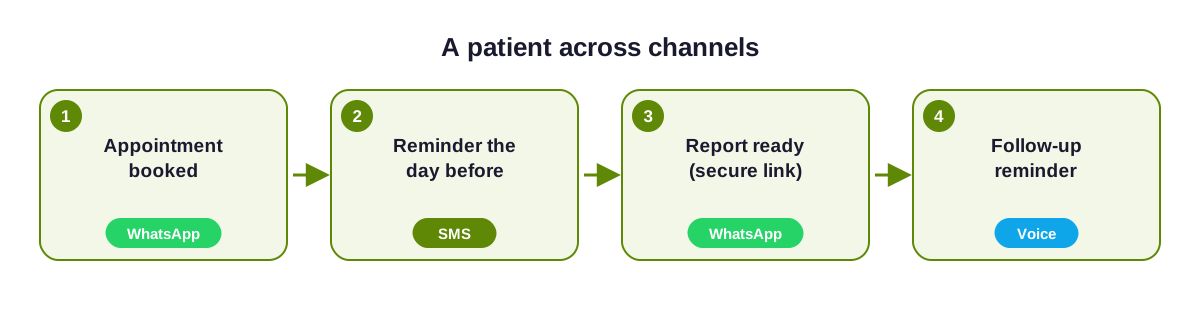
A patient across channels
Set up appointment reminders, step by step
Send booking events from your hospital system
When a slot is booked or changed, your system sends the patient's name, number, date and time to the platform.Record the patient's consent
Ask at registration whether the patient agrees to WhatsApp and SMS reminders, and store the answer with the record.Write the reminder once per channel
Keep it short: clinic name, date, time and how to reschedule. Register the SMS on DLT and submit the WhatsApp version to Meta. See message templates.Set the timing and fallback
For example a WhatsApp reminder the day before and an SMS the same morning for patients who have not confirmed. See fallback routing.Let patients reply to confirm or reschedule
A reply flow, or an AI chatbot with human handoff, reduces calls to the front desk. Pass anything unusual to staff.Review no-shows and delivery reports
Compare reminders delivered with appointments kept, then adjust timing. Use the reports to find numbers that need updating.
Keeping patient information private
- Send a notice, not the content. Tell the patient a report is ready and link to a secure, login-protected page. Do not attach reports or diagnoses to a message.
- Keep messages minimal. Avoid naming a condition or test in a reminder that others may see on a lock screen.
- Follow the law and your own policy. India's Digital Personal Data Protection Act, 2023 expects valid consent for personal data. Take advice on your consent process and retention.
- Separate reminders from marketing. Health camps and offers need consent and DND checks. See DND compliance in India.
Related pages
See omnichannel messaging use cases, how to set up omnichannel messaging and the WhatsApp Business API. Hospitals and clinics can request a callback.
Healthcare omnichannel questions
Which channel is best for appointment reminders?
WhatsApp for patients who opted in, because they can reply to confirm or reschedule, with SMS as the fallback for messages that are not delivered.
Can I send medical reports on WhatsApp?
Send a notice and a secure link instead of the report itself, and follow your data-protection obligations for patient information.
Do patients need to opt in?
Yes. Record each patient's consent for each channel, and honour opt-outs.
Can small clinics use this without a developer?
Yes. The panel lets staff send reminders from a list and set a fallback order without code.
Ready to unify your business communication?
Tell us what you want to send and on which channels, and our team will help you get set up on your own branded panel.