

Omnichannel Messaging Use Cases with Channel Order
Short answer: The most common omnichannel messaging use cases are OTPs, order updates, cart recovery, payment and EMI reminders, appointment reminders, lead follow-up, feedback requests and event invitations. For each one you choose a first channel and a fallback, for example WhatsApp then SMS for an order update, or SMS then a voice call for an OTP.
The table gives a channel order for each use case, and the worked examples below show three of them step by step. To build your own, follow the setup guide.
Last updated: 24 October 2026.
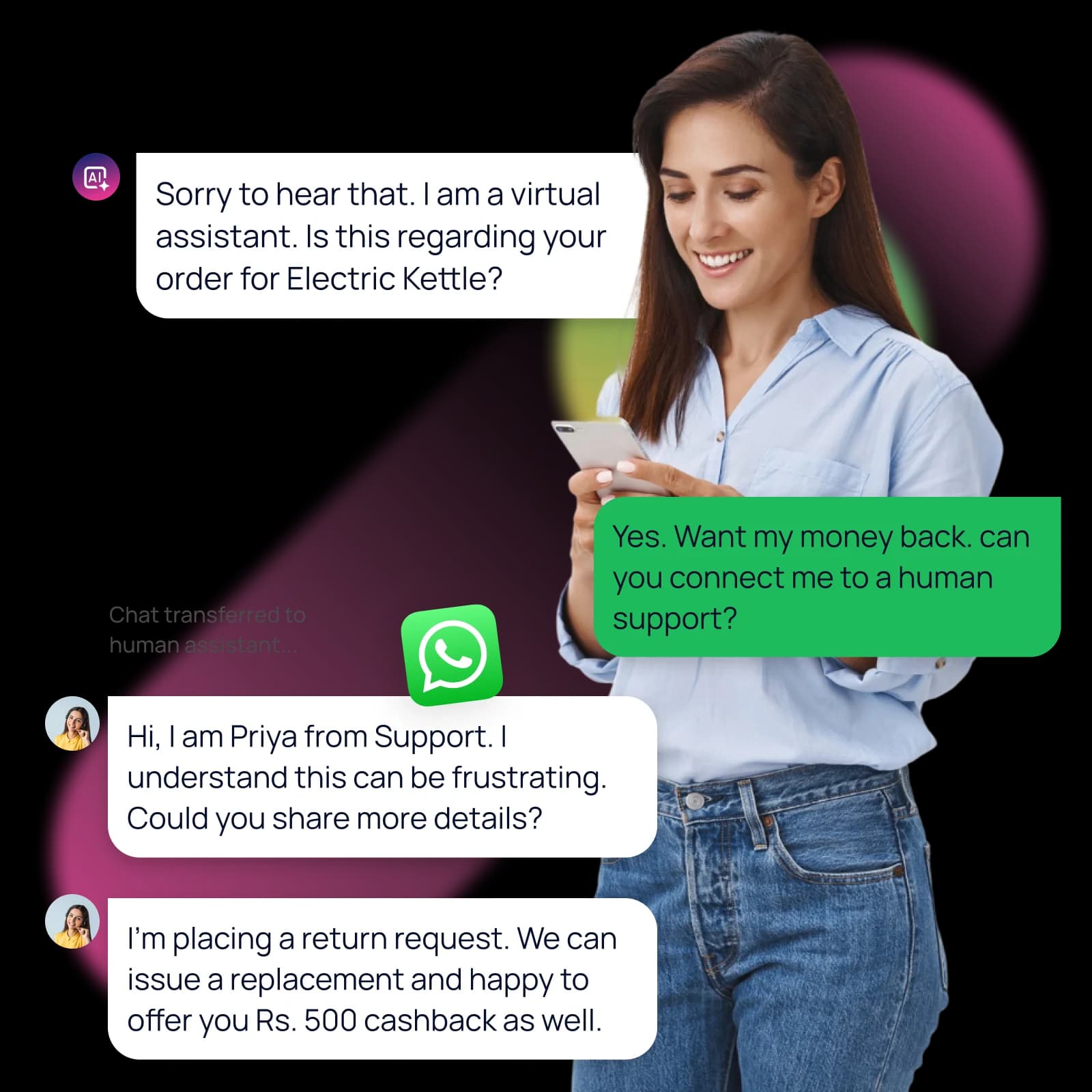
Eight use cases and a channel order for each
| Use case | First channel | Fallback | Why this order |
|---|---|---|---|
| OTP and login codes | SMS | Voice call | SMS reaches any active number; a call reads the code out if it is not read. |
| Order and delivery updates | SMS | Links and buttons on WhatsApp, a plain text safety net. | |
| Cart recovery | SMS | A reminder with the product and a link, only to opted-in customers. | |
| Payment and EMI reminders | SMS, then voice | Escalate only when earlier channels were not delivered. | |
| Appointment reminders | SMS | The customer can reply to confirm or reschedule. | |
| Lead follow-up | SMS, then a call | Reply quickly where the lead already is, and call if there is no response. | |
| Feedback requests | A short question with a tap, with a longer survey by email. | ||
| Event invitations | RCS or WhatsApp | SMS | Rich invitation first, plain details behind it. |
Worked example 1: an online order
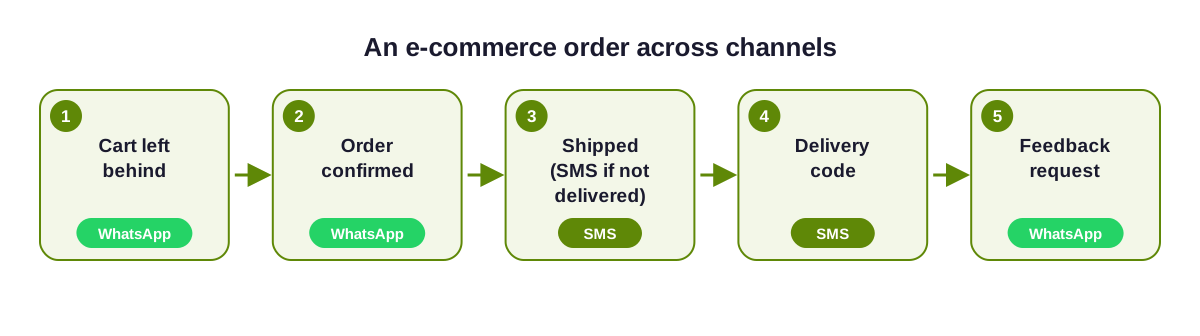
Order placed
Your store sends the event. WhatsApp sends the confirmation with an order link.Order shipped
WhatsApp sends tracking. If it is not delivered, SMS carries the same information.Out for delivery
SMS sends the delivery code, because it reaches any active number.Delivered
WhatsApp asks for feedback with a single tap.
Full guide: omnichannel messaging for e-commerce.
Worked example 2: a loan EMI
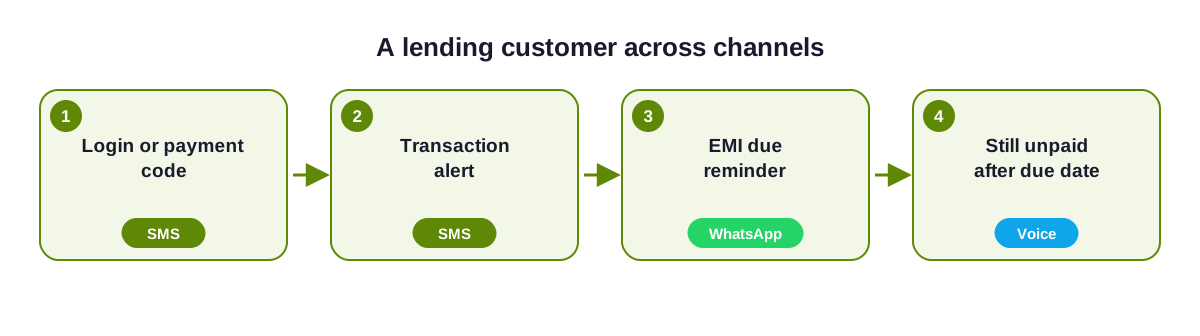
Three days before the due date
WhatsApp sends a reminder with the amount and a payment link.On the due date
If the reminder was not delivered, SMS sends the same message on a registered transactional template.After the due date
If the payment is still pending, an automated call follows, within the calling hours that apply.
Full guide: omnichannel messaging for banks and NBFCs.
Worked example 3: a clinic appointment
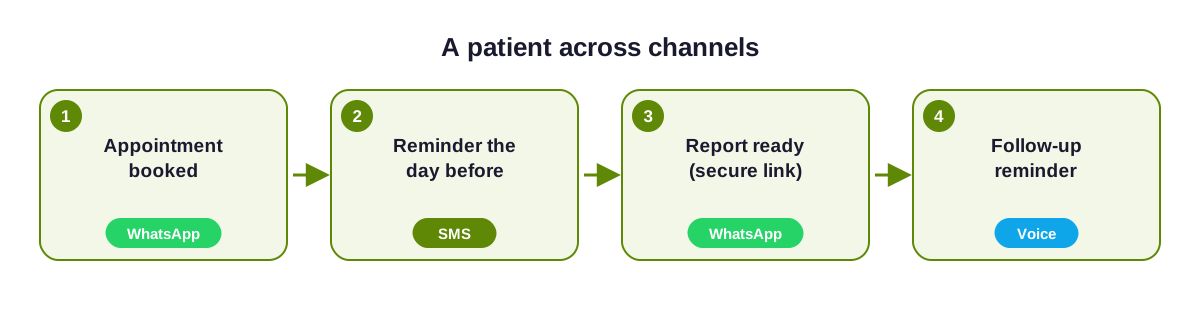
Booking confirmed
WhatsApp sends the slot and a reschedule option.The day before
A reminder goes on WhatsApp, with SMS behind it.After the visit
A report-ready notice carries a secure link, not the report itself.
Full guide: omnichannel messaging for healthcare.
How to choose the right order for your own use case
- How urgent is it? The more urgent, the more you want a plain, reliable channel behind the first one.
- Did the customer opt in? A channel is only available if they agreed to it.
- Does it need a link or a reply? Choose WhatsApp or RCS for that, with SMS as the safety net.
- What does a miss cost? For a payment or a delivery, it is worth adding a call.
Related guides
Read what omnichannel messaging is, omnichannel vs multichannel and fallback routing. For the products, see WhatsApp, bulk SMS and voice.
Omnichannel use case questions
What are the best use cases for omnichannel messaging?
Messages where a miss costs you something: OTPs, payment and EMI reminders, order and delivery updates and appointment reminders. Add marketing once those work.
Which channel should I use first?
It depends on the message and the customer's opt-in. WhatsApp suits links and replies, SMS suits OTPs and alerts, and a call suits urgent reminders.
Can I use omnichannel for marketing?
Yes, for customers who opted in, using approved templates and respecting DND preferences and permitted hours on promotional messages.
How many channels should one message use?
Usually two or three: a first choice, a fallback and, for urgent messages, a call.
Ready to unify your business communication?
Tell us what you want to send and on which channels, and our team will help you get set up on your own branded panel.