
RCS Coverage in India: Availability, Reach & SMS Fallback
RCS is available in India, but not on every phone, network or account the way SMS is. Whether a specific message actually reaches a recipient as RCS depends on their device, operating system, carrier and settings - several factors stacked together, not one on/off switch.
This page explains what "RCS coverage" actually means, what affects it in India specifically, and how businesses should plan around partial coverage with a configured SMS fallback - rather than assuming RCS will reach everyone.
On this page:
Whether RCS is available in India, and what affects reach
Device, OS and carrier considerations, and how to check your own reach
Why SMS fallback matters, and how the fallback architecture works
Planning for partial availability by use case, developer notes and FAQs
Is RCS Available in India?
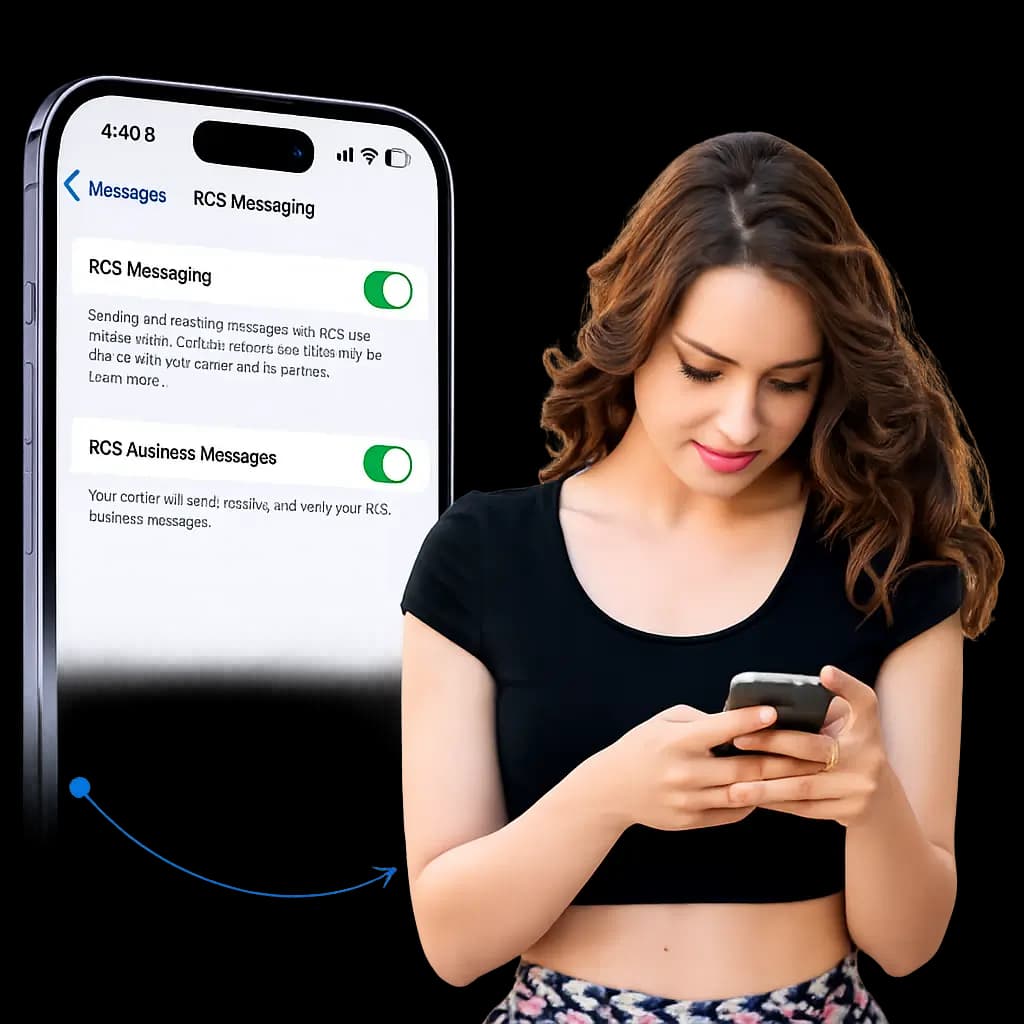
Yes - RCS messaging is available in India. Google Messages supports RCS chat features by default on most modern Android phones, Indian carriers including Jio, Airtel and Vodafone Idea have been enabling and partnering on RCS, and Apple added native RCS support to iPhone starting with iOS 18. That said, availability is not the same as guaranteed reach for every recipient. What "RCS coverage" means in practice depends on:
The recipient's specific device model and hardware
Their operating system and version
Their mobile carrier's RCS participation
Whether they have RCS/chat features actually enabled
No messaging channel, including RCS, reaches 100% of phones - which is exactly why SMS fallback exists as a deliberate design choice, not an afterthought. See below for how each factor plays out.
What Does RCS Coverage Mean?
"RCS coverage" describes the share of a business's actual audience that can receive a message as RCS - rich card, branding and all - rather than falling back to plain SMS. It's a property of the recipient's device and network, not something a business or provider controls directly. This is different from what RCS Business Messaging itself is and does, which is covered on RCS Business Messaging.
What Affects RCS Availability?
Four factors combine to determine whether any single message actually reaches a recipient as RCS:
Device Compatibility
The recipient's phone model and hardware need to support RCS messaging in the first place - most modern smartphones do, but not every device in active use does.
Operating System
On Android, RCS generally works through Google Messages set as the default messaging app; on iOS, native RCS support was only added starting with iOS 18, so older iPhones or older iOS versions won't have it.
Carrier/Network Enablement
RCS depends on the recipient's mobile carrier participating in RCS messaging - Indian operators including Jio, Airtel and Vodafone Idea have been rolling out and partnering on RCS support, but participation and rollout pace can differ by carrier.
User Settings
Even on a compatible device and network, RCS requires the user to actually have RCS/chat features enabled in their messaging app - it isn't always on by default for every user.
RCS Business Messaging Availability
There are two separate layers to "availability" worth keeping distinct. The first is recipient-side coverage - whether the person you're messaging can receive RCS at all, covered above. The second is sender-side availability - whether your business has a verified RCS sender agent through a platform, since sending RCS Business Messages requires that verification, not just a recipient with a compatible phone. A message can only arrive as RCS when both sides line up.
How Businesses Can Check RCS Reach
Rather than relying on an assumed coverage percentage, a more reliable approach is to measure it directly against your own audience:
- 1
Send a test campaign to a representative sample
Use a cross-section of your real contact list, not a hand-picked group of known RCS users.
- 2
Review delivery status per recipient
Your dashboard shows which messages delivered as RCS and which fell back to SMS.
- 3
Track fallback rate over time
A rising or falling fallback rate tells you how your specific audience's RCS coverage is trending.
- 4
Re-check periodically
Device, OS and carrier support keep evolving, so a one-time check goes stale.
RCS vs SMS Coverage
This is specifically about reach - see RCS Messaging Pricing in India for the cost side of this comparison.
| Aspect | RCS | SMS |
|---|---|---|
| Reach | Depends on device, OS version, carrier participation and user settings. | Reaches virtually any active mobile number, regardless of device or app. |
| Guaranteed delivery | Not guaranteed - varies per recipient. | High delivery reliability across the network. |
| iOS support | Available only from iOS 18 onward, on supported carriers. | Universal across all iOS versions. |
| Android support | Common via Google Messages as the default app, but not universal across every Android device or account. | Universal across all Android devices. |
| Best treated as | An enhanced experience layer where available. | The dependable baseline channel, including as fallback. |
Why SMS Fallback Matters
Because RCS coverage is partial and device-dependent, treating it as your only delivery channel means some recipients simply won't receive time-sensitive messages at all. SMS fallback closes that gap - it doesn't compete with RCS, it backstops it.
RCS + SMS Fallback Architecture
RCS (Primary Channel)
Supported delivery conditions checked (device/carrier RCS support)
Configured fallback to SMS, under business-defined routing
This is business-defined routing, not one automatic behavior applied identically to every message - the rules for when and how a message falls back are set on your account for a given use case. See Omnichannel Messaging Fallback and Omnichannel Messaging Platform for how this routing works in depth, and SMS API for the fallback channel itself.
Want To Know How Far RCS Reaches Your Audience?
Talk to our team about testing RCS reach against your own contact list, with SMS fallback configured from day one.
Planning For Partial RCS Availability By Use Case
The right fallback discipline depends on how time-sensitive your messages are.
General Notifications
Any high-volume, notification-driven use case should assume a mixed audience of RCS-capable and non-capable recipients, and design the fallback path before the campaign goes out, not after delivery gaps show up.
How Businesses Should Plan For Partial RCS Availability
Treat RCS as an enhanced experience, not the only delivery path, for anything time-sensitive
Configure SMS fallback for every use case where a message must get through
Keep DLT-registered SMS templates ready as the fallback content, not an afterthought
Monitor fallback rate from your dashboard to understand your real audience's coverage
Re-verify coverage assumptions periodically as device and carrier support evolves
Developer Considerations
A few practical points for handling coverage in code rather than assuming it:
Webhook Status Handling
Track whether a message ultimately delivered on RCS or fell back to SMS from the same status event.
Fallback, Not Retry Logic
A failed RCS attempt should trigger configured fallback, not a blind resend on the same channel.
Monitor Fallback Rate
Use delivery analytics to track how much volume is completing on RCS versus SMS over time.
Test Across Device Types
Validate behavior on both RCS-capable and non-capable test devices before a full campaign.
RCS Coverage FAQs
Is RCS available in India?
Yes, RCS messaging is available in India through Google Messages on supported Android devices, and Indian carriers including Jio, Airtel and Vodafone Idea have been enabling and partnering on RCS support. Availability for any specific recipient still depends on their device, OS version, carrier and settings - it isn't universal.
Do all Android phones support RCS in India?
No. RCS on Android generally requires Google Messages set as the default messaging app, a supported OS version, and carrier participation - not every Android device or account in active use meets all three conditions.
Does RCS work on iPhone in India?
Apple added native RCS support starting with iOS 18. iPhones on earlier iOS versions, or where the carrier hasn't enabled RCS, won't receive RCS messages the same way.
Do Jio, Airtel and Vi all support RCS?
India's major carriers have been rolling out and partnering on RCS support, including carrier-level features like spam protection. Rollout pace and specific feature support can differ by carrier, so it's worth checking current status with your provider rather than assuming uniform coverage.
What happens if a customer's device doesn't support RCS?
The message doesn't reach them as RCS. If a configured fallback is set up for that use case, it can move to SMS instead under business-defined routing rules - otherwise the send simply fails on that channel.
How can a business check its own RCS reach?
Send a test campaign to a representative sample of your contact list and review delivery status per recipient from your dashboard, rather than assuming a fixed reach percentage - actual coverage depends on your specific audience's devices, OS versions and carriers.
Is RCS coverage the same as RCS Business Messaging availability?
Not quite. Recipient-side coverage depends on their device, OS and carrier; separately, a business needs its own sender agent verified to send RCS Business Messages in the first place. Both layers affect whether a message actually gets delivered as RCS.
Why isn't RCS coverage as universal as SMS?
SMS works over the basic cellular network layer that virtually every phone supports. RCS depends on a modern messaging app, current OS support and carrier enablement, which is why it isn't available to every device the way SMS is.
Can a business rely on RCS alone for critical alerts?
It isn't recommended. Because RCS reach varies by device and carrier, a configured SMS fallback is the standard way to make sure a critical alert still reaches recipients RCS can't.
Does RCS coverage vary within India?
Coverage can vary by which carrier a recipient is on and how quickly that carrier has rolled out RCS support, among other device-level factors - there's no single fixed coverage figure that applies to every audience or region.
How is SMS fallback for RCS actually triggered?
It's configured, business-defined routing - a message that doesn't meet supported delivery conditions on RCS (device or carrier support) within your rules can move to SMS as the next channel, rather than this happening the same way for every message automatically.
Do I need separate logic to detect which recipients support RCS?
No - rather than pre-checking each recipient, the practical approach is to send with fallback configured and let delivery-status events determine what happened, handling the RCS-delivered and SMS-fallback outcomes through the same webhook.
Will RCS coverage improve over time in India?
Device support, carrier participation and OS-level support (like Apple's iOS 18 addition) have been expanding, and are likely to keep evolving. Treat current coverage as a snapshot to verify periodically, not a fixed, permanent state.
Is full RCS coverage guaranteed for enterprise accounts?
No. Coverage depends on the recipient's device, OS and carrier regardless of account tier - an enterprise plan affects platform features and support, not whether a given phone supports RCS.
What should I plan for if only part of my audience is RCS-capable?
Segment your expectations accordingly, configure SMS fallback for time-sensitive sends, and monitor fallback rates from your dashboard so you know how much of your real audience is being reached on which channel.
Ready to unify your business communication?
Most businesses are live on their own branded panel within days, not months - talk to our team today and see how fast you can start sending.