

Omnichannel Messaging for Banks and NBFCs in India
Short answer: Omnichannel messaging for banks and NBFCs means sending OTPs, transaction alerts and EMI reminders on the channel most likely to reach the customer, with a fallback and a record of what was delivered. SMS usually carries OTPs and alerts on DLT-registered templates, WhatsApp carries reminders with payment links, and a call follows for overdue accounts.
This guide maps common lending and banking messages to channels and explains the rules to keep in mind. For the sector overview, see messaging for banking, finance and insurance.
Last updated: 24 October 2026.
Common messages and a channel order for each
| Message | First channel | Fallback | Note |
|---|---|---|---|
| Login or transaction OTP | SMS | Voice call | Use a transactional template. Never reuse a code. |
| Debit or credit alert | SMS | Show masked account details only. | |
| EMI due reminder | SMS | Include the amount, date and a payment link. | |
| Overdue follow-up | SMS, then voice | Respect calling hours and DND rules. | |
| Loan application status | SMS | Keep the message short and link to a secure page. | |
| KYC or document request | SMS | Link to a secure upload, do not ask for documents in chat. |
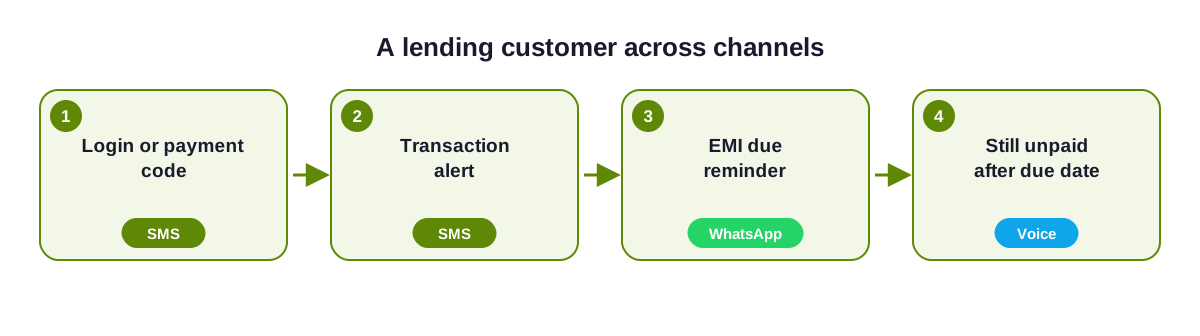
A lending customer across channels
Set up an EMI reminder flow, step by step
Pull due dates from your loan system
Send the customer, amount and due date to the platform on a schedule, for example three days before and on the due date.Check consent and registration
Confirm the customer agreed to WhatsApp messages, and that your entity, sender ID and SMS templates are registered. See DLT registration.Write the reminder for WhatsApp and SMS
Use variables for name, amount and date. Keep the SMS version on a transactional template. See transactional SMS.Set the order and wait times
WhatsApp first, SMS if it is not delivered, and a call only after the due date has passed. See fallback routing.Add a payment link and a reply path
Link to a secure payment page. Let the customer reply to ask for an extension, and route those replies to a person.Review delivery reports and adjust
Check which channel delivered and when. See delivery reports.
Rules and good practice
- Registration: SMS runs on TRAI's DLT platform, and WhatsApp messages use Meta-approved templates.
- Consent and DND: promotional messages respect DND preferences and permitted hours. See DND compliance in India.
- Sensitive data: do not put full account numbers, card details or passwords in any message. Use masked values and secure links.
- OTPs: see OTP SMS and Voice OTP for delivery and fallback options.
- Your own policies: follow your regulator's and your compliance team's rules for customer communication.
Related pages
See omnichannel messaging use cases, how to set up omnichannel messaging and the omnichannel messaging API. Teams that want to talk it through can request a callback.
Banking and NBFC omnichannel questions
Which channel should a bank use for OTPs?
SMS is the usual first choice because it reaches any active mobile number, with a voice call as a fallback when the code is not read.
Can an NBFC send EMI reminders on WhatsApp?
Yes, to customers who opted in, using Meta-approved templates. Keep SMS behind it for messages that are not delivered.
Is it safe to send account details in a message?
Avoid it. Send masked details and a secure link, and follow your compliance team's rules.
Do overdue calls have restrictions?
Yes. Voice campaigns in India follow TRAI's rules, including DND preferences and calling hours, and your own collection policies apply as well.
Ready to unify your business communication?
Tell us what you want to send and on which channels, and our team will help you get set up on your own branded panel.