

Omnichannel vs Multichannel Messaging
Short answer: Multichannel messaging uses several channels, each run on its own. Omnichannel messaging connects those channels to one customer record and one set of rules, so a message can fall back to another channel and reports show the whole journey. Multichannel is simpler to start with. Omnichannel avoids duplicate and missed messages when messages matter.
The two terms are often used as if they mean the same thing. They do not, and the difference decides how much manual work your team does. New to the idea? Start with what omnichannel messaging is.
Last updated: 24 October 2026.

Omnichannel vs multichannel at a glance
| Aspect | Multichannel | Omnichannel |
|---|---|---|
| Customer record | A separate contact list in each tool. | One shared record across channels. |
| Choosing the channel | Someone on the team picks it by hand. | A rule picks it, with a fallback order. |
| Duplicate messages | The same customer can get the same message on several channels. | Sending stops as soon as one channel delivers. |
| Reporting | One report per channel, combined by hand. | One report across channels. |
| Conversations | A customer starts again on each channel. | The conversation can continue on another channel. |
| Effort at the start | Lower, because each tool is set up alone. | Higher, because you plan rules and approvals first. |
| Best for | One or two channels at low volume. | Messages that matter, or a mixed audience. |
The difference in one picture
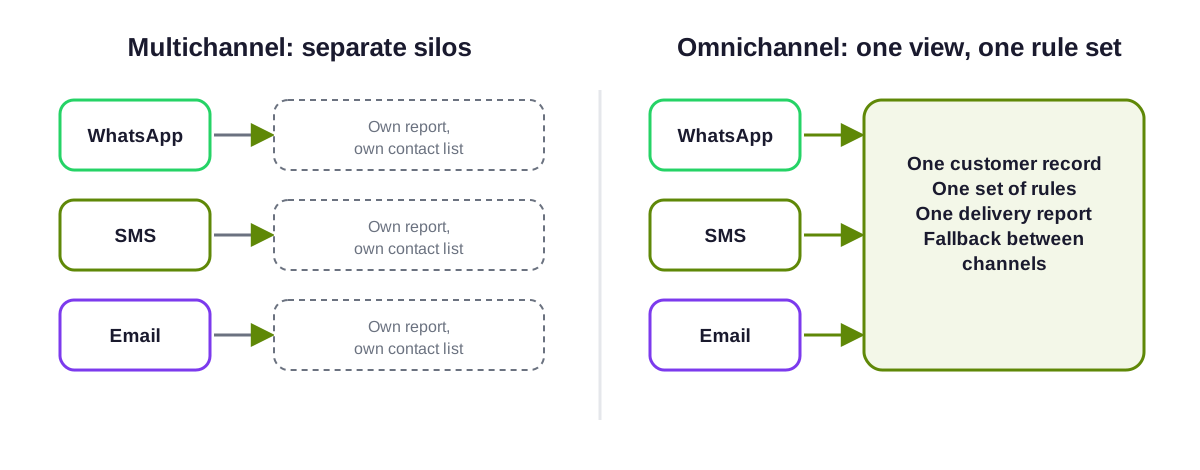
Example: the same overdue payment
Multichannel: three tools send a reminder at once. The customer gets a WhatsApp message, an SMS and a call within minutes, and nobody on your team knows which one worked.
Omnichannel: the platform sends a WhatsApp reminder first. If it is not delivered after the wait time you set, it sends an SMS. If that also fails, it places a call. It stops at the first success and logs the result in one report. See fallback routing for how the order is set.
How to move from multichannel to omnichannel in 5 steps
List the tools and channels you use today
Write down each channel, who uses it and what it sends. You will usually find the same message sent from more than one place.Pick the messages that matter most
Start with OTPs, payment reminders and order updates. These are the ones where a missed message costs you something.Set a channel order for each
For example WhatsApp then SMS for an order update, or SMS then voice for an OTP. The setup guide shows a full table.Move the contacts and consent onto one platform
Bring your lists together and keep each customer's consent with the record, so rules can respect it.Run both for a short time, then switch
Send a small share of messages through the new fallback while the old tools stay on. Compare delivery reports, then move the rest.
Common myths
- "Omnichannel means using every channel." No. Two or three connected channels are omnichannel. Seven disconnected ones are not.
- "It means one shared inbox." An inbox helps, but the core of omnichannel is shared rules and a shared record.
- "It replaces consent and registration." It does not. DLT registration, WhatsApp approvals and DND rules still apply on each channel.
Where to go next
Read omnichannel messaging use cases for channel orders by message type, see the omnichannel messaging platform, or compare providers in the best CPaaS platforms in India.
Omnichannel vs multichannel questions
What is the main difference between omnichannel and multichannel?
Multichannel uses several channels separately. Omnichannel connects them to one customer record and one set of rules, so messages can fall back between channels and reports cover all of them.
Is omnichannel better than multichannel?
Not always. For one or two channels at low volume, multichannel is simpler. Omnichannel pays off when messages matter or customers use different channels.
Can I start multichannel and move to omnichannel later?
Yes. Many teams do. Start with the messages that matter most and move them one by one.
Does omnichannel cost more?
It can reduce the number of tools you pay for, but the cost depends on channels and volume. See the pricing guides for how each channel is priced.
Ready to unify your business communication?
Tell us what you want to send and on which channels, and our team will help you get set up on your own branded panel.